
In the realm of mechanical power press operations, maintaining equipment and adhering to safety protocols is paramount. For maintenance managers, understanding the limits and risks associated with using smaller tools on larger presses is essential. Not only can improper use compromise press integrity, but it can also lead to costly downtime and repairs.
Capacity Considerations
Mechanical power presses are designed with specific capacity limits set by the manufacturer. These limits include aspects like tonnage, energy output, stroke length, shut height, bed size, off-center loading limits, and stroking speed. Each of these parameters dictates which dies can be safely operated within the press. When technicians transition smaller dies into larger presses, it’s crucial to understand the implications on capacity limits.
In general, the tonnage rating represents the maximum load a press can handle without incurring damage during regular operations. A typical rating assumes that the die occupies at least two-thirds of the press slide length. When dies fall short of this guideline, the press can be subjected to concentrated loads that can severely harm its structure and drivetrain.
The Risks of Using Smaller Dies
Consider the impact of using a smaller die—let’s say a 30-inch die that requires 285 tons to produce an acceptable part—on a 600-ton press with a 120-inch bed. While the press theoretically has enough capacity, the limited foot length of the die presents a significant risk. The maximum allowable tonnage drops when the die length covers less than two-thirds of the press slide, which could lead to unintended stress concentrations on specific parts of the press. This can increase the likelihood of damage to the slide, pitman connections, and other critical components.
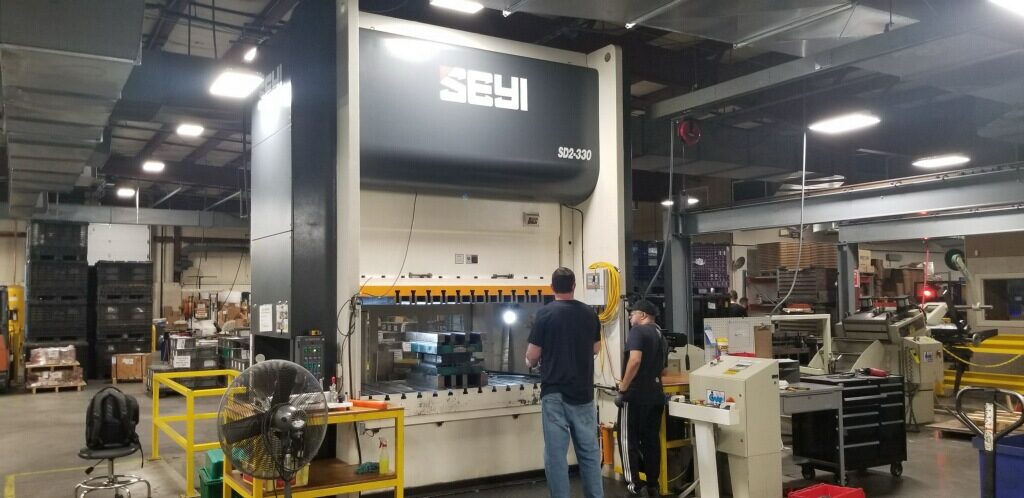
Image Credit, SEYI (for reference only)
Calculating Safe Usage
In the example provided, while it might seem logical to assign the 30-inch die to the larger press with ample capacity, maintenance managers must dig deeper. To ensure safe operation, it’s essential to calculate how odd die sizing affects overall capacity. For example, if the die only occupies a fraction of the bed length, the press may not sustain its rated capacity due to the risk of uneven weight distribution. The mechanical stress can expose operators and equipment to hazardous conditions, leading to potential accidents and press failure.
Best Practices for Maintenance Managers
1. Capacity Documentation: Regularly review and document the tonnage capacities for your presses. Ensure that all personnel are aware of these limits and regularly trained on operational guidelines.
2. Die Compatibility: Before assigning smaller dies to larger presses, evaluate the compatibility based not just on tonnage but also on die length and positioning.
3. Load Distribution: Utilize dies that maximize bed coverage whenever possible to distribute loads evenly across the press.
4. Monitoring and Maintenance: Implement monitoring systems to track the performance of presses using smaller tools. Schedule regular maintenance checks to assess wear and tear resulting from potential overloading.
5. Training and Awareness: Ensure that press technicians and operators are well-informed about the risks associated with using incorrectly sized dies and the implications for equipment maintenance.
By adhering to these best practices, maintenance managers can mitigate risks, extend machinery lifespan, and maintain safe working environments within their operations. Understanding the relationship between die size and press capacity is crucial in preserving the integrity and functionality of mechanical power presses.
This article is for reference only, contact HEL, Inc. today to evaluate your operations press needs.
HEL, Inc. is the exclusive distributor for SEYI presses in Michigan.


